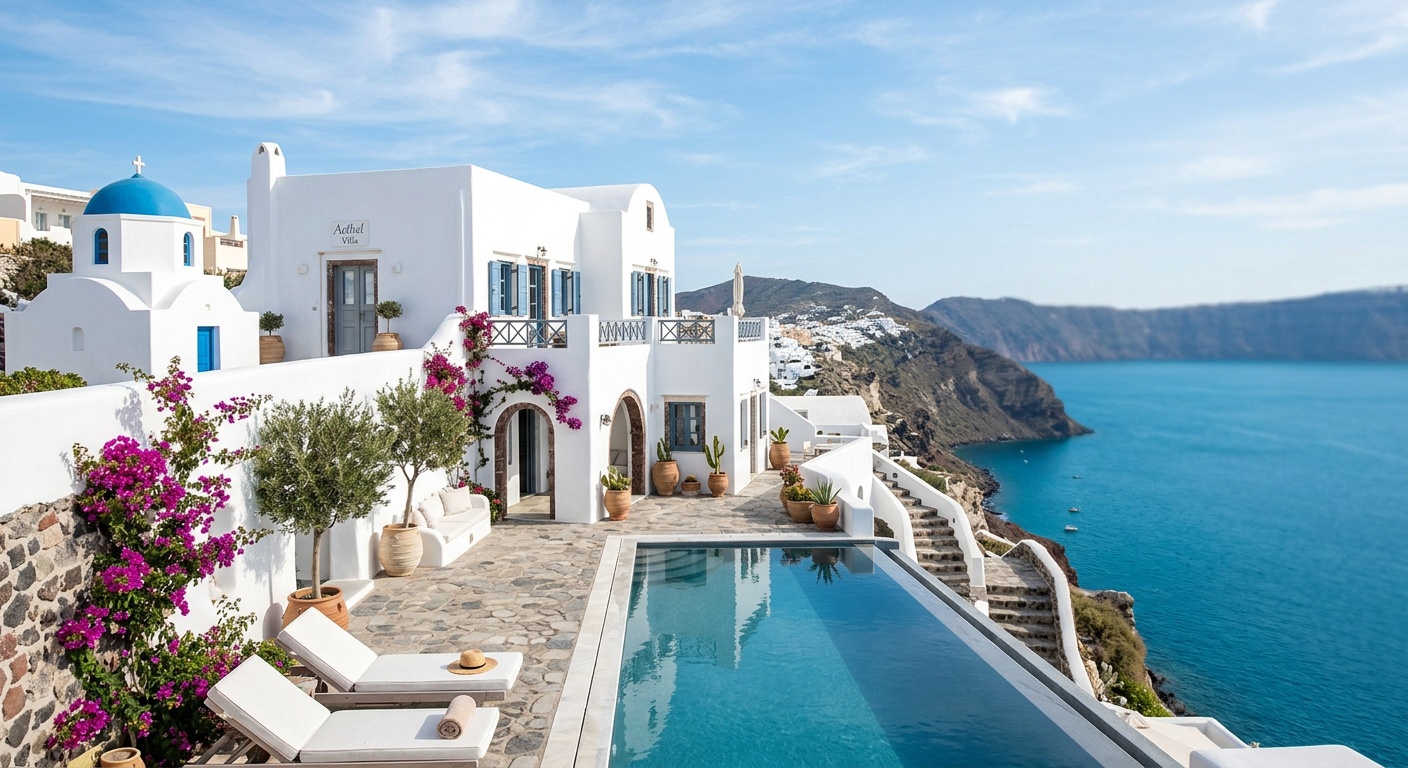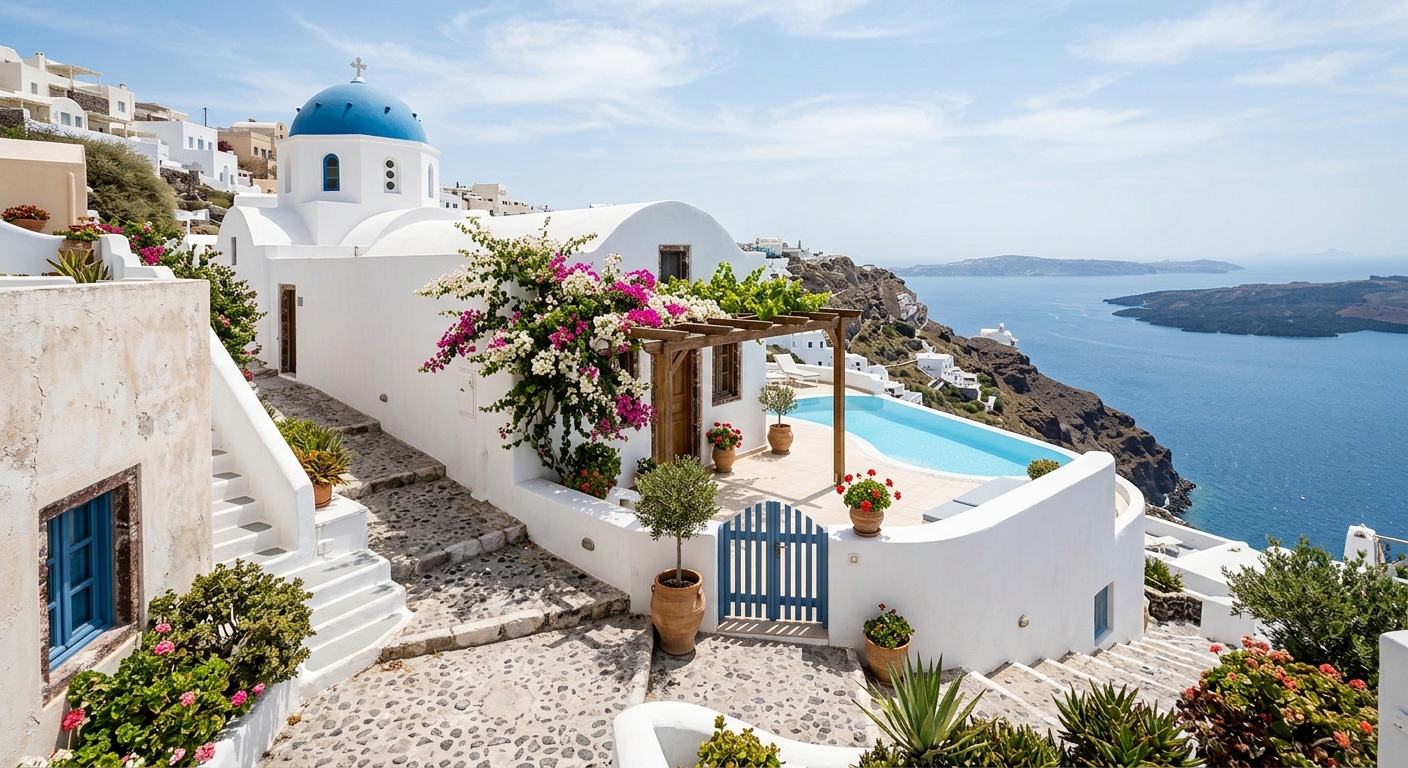
Why International Buyers Are Turning to Greek Property Investments
Reading time: 8 minutes
Picture this: a retired couple from Toronto sips coffee on a whitewashed terrace in Paros, watching the Aegean shift colors at sunset, while their investment portfolio quietly appreciates faster than their old rental property back home ever did. That scene isn’t a fantasy anymore—it’s a pattern repeating itself thousands of times across Greece in 2026, as buyers from North America, the UK, China, and the Middle East flock to a market that was written off just a decade ago.
So what changed? Let’s unpack why Greece has become one of the most talked-about property destinations in Europe right now, and whether the hype matches reality.
Table of Contents
- The Numbers Behind the Boom
- What’s Actually Driving Demand
- Golden Visa Reality Check in 2026
- Where the Smart Money Is Going
- Common Challenges (and How to Handle Them)
- Frequently Asked Questions
The Numbers Behind the Boom
Greek property prices have climbed for nine consecutive years, according to Bank of Greece data, with average residential values up roughly 8.9% year-on-year heading into 2026. Athens neighborhoods like Koukaki and Pangrati have seen even steeper gains, while island markets in the Greek islands region—think Mykonos, Paros, and increasingly Crete—continue to post double-digit appreciation in prime segments.
That said, prices are still meaningfully lower than comparable properties in Portugal, Spain, or Italy’s coastal regions, which is exactly what’s pulling in value-conscious international buyers. A three-bedroom villa near Chania that might cost €650,000 could easily fetch €1.2 million on the Amalfi Coast.
Key Compliance and Market Insights
- Understanding Greece’s evolving property tax landscape
- Navigating regional price variance between islands and mainland
- Timing purchases around seasonal rental demand cycles
Well, here’s the straight talk: buying in Greece isn’t about chasing the cheapest square meter—it’s about strategic positioning in a market that’s still catching up to its Mediterranean neighbors while offering better long-term upside.
What’s Actually Driving Demand
Three forces are converging to make 2026 a pivotal year for Greek real estate.
1. Remote Work Has Permanently Changed Buyer Priorities
Digital nomads and remote executives no longer need to live near an office, and Greece’s combination of low cost of living, EU membership, and 300+ days of sunshine makes it an obvious contender. The Greek government’s Digital Nomad Visa, refined in 2025, now allows qualifying remote workers to stay for up to two years with streamlined renewal, and many end up purchasing property once they’ve tested the lifestyle for a season or two.
2. Currency and Yield Arbitrage
For buyers holding US dollars, UK pounds, or Gulf currencies, favorable exchange rates against the euro have made Greek assets relatively cheap. Combine that with gross rental yields averaging 5.2% to 6.8% in tourist hotspots—well above the eurozone average of around 3.9%—and the math starts to look compelling for income-focused investors.
3. Infrastructure Upgrades Are Raising the Ceiling
Athens International Airport’s expansion, completed in phases through 2025, along with new marina developments in the Peloponnese and improved ferry connectivity to secondary islands, have opened up previously overlooked areas to serious investment. Areas that were “off the map” five years ago—like Syros or parts of southern Crete—are now drawing developer attention and, consequently, buyer interest.
Golden Visa Reality Check in 2026
No conversation about Greek property investment is complete without addressing the Golden Visa program, though it’s evolved considerably since its original 2013 launch. As of 2026, the minimum investment threshold sits at €800,000 in high-demand zones (Athens, Thessaloniki, Mykonos, Santorini) and €400,000 in most other regions, following the tiered restructuring introduced in 2024 to cool overheated urban markets.
Quick Scenario: Imagine a Singaporean family looking for EU residency and a lifestyle upgrade. They could purchase a €410,000 apartment in Nafplio, secure residency rights for the entire family, and rent the unit out during peak tourist months—effectively offsetting a chunk of their annual costs while building equity in an appreciating market.
Is the program still worth it? Opinions differ. Some economists argue Golden Visa demand has artificially inflated prices in central Athens, pricing out local buyers. Others counter that the foreign capital has funded much-needed renovations of aging housing stock that would otherwise sit vacant. Both perspectives hold water, which is why savvy investors are increasingly looking beyond the capital toward secondary cities and islands where the program’s effects are less distortive.
Where the Smart Money Is Going
Buyers researching greece real estate for sale in 2026 are increasingly diversifying away from the obvious hotspots. Here’s a comparative snapshot of how different regions stack up on the metrics that matter most.
| Region | Avg. Price/m² (2026) | Gross Rental Yield | 5-Yr Price Growth | Golden Visa Threshold |
|---|---|---|---|---|
| Athens (Center) | €3,400 | 4.8% | 62% | €800,000 |
| Crete (Chania) | €2,650 | 6.1% | 48% | €400,000 |
| Cyclades (Paros) | €5,900 | 5.4% | 71% | €800,000 |
| Peloponnese | €1,950 | 6.8% | 39% | €400,000 |
| Thessaloniki | €2,100 | 5.6% | 44% | €800,000 |
Visualizing Buyer Origin Trends in 2026
Data compiled from real estate agencies and notary filings shows a clear shift in which nationalities are driving transaction volume this year.
Common Challenges (and How to Handle Them)
Challenge 1: Bureaucratic Delays
Greek property transactions still involve notaries, tax registries (AFM numbers), and municipal checks that can feel slow compared to Anglo-Saxon systems. The fix? Engage a local lawyer early—before you fall in love with a specific property—so title checks and tax clearances run parallel to your search rather than after you’ve made an offer.
Challenge 2: Renovation Cost Surprises
Older stone properties on islands often look move-in ready but hide structural issues, particularly around plumbing and roof insulation. A buyer in Naxos last year budgeted €40,000 for cosmetic updates and ended up spending €95,000 after discovering foundation cracks. Always commission an independent structural survey, even on properties marketed as “renovated.”
Challenge 3: Currency Volatility During Closing
Deals can take three to six months to close, and currency swings during that window can erase your perceived discount. Locking in a forward exchange contract with a currency broker at the point of offer acceptance is a simple, underused safeguard.
Pro Tip: The right preparation isn’t just about avoiding paperwork headaches—it’s about entering the Greek market with the same rigor you’d apply to any serious international asset allocation decision.
Frequently Asked Questions
Is it still profitable to invest in Greek property in 2026, given how much prices have risen?
Yes, for most buyers targeting yield or long-term appreciation, though the easy gains of 2021-2023 have moderated. Secondary markets like the Peloponnese and parts of Crete still offer stronger yield-to-price ratios than saturated hotspots like central Mykonos.
Do I need to speak Greek or live in the country to manage a rental property?
No. Most international owners work with local property management firms that handle everything from guest communication to maintenance, typically charging 15-25% of rental income. This is common practice and doesn’t require you to relocate or learn the language.
What’s the biggest mistake first-time foreign buyers make?
Underestimating closing costs. Beyond the purchase price, buyers should budget an additional 8-10% for transfer tax, notary fees, legal fees, and registration costs—a figure that surprises many newcomers who assume prices are all-inclusive.
Your Roadmap Forward: Making Greece Work for You
Greece’s property market in 2026 rewards buyers who move deliberately rather than impulsively. Here’s how to approach your next steps:
- Define your primary goal first — residency, rental income, lifestyle, or a blend of all three—since this determines which region fits best.
- Build your local team before you shop — a lawyer, tax advisor, and structural surveyor should be on standby before you make an offer.
- Look beyond the postcard destinations — Peloponnese, Thessaloniki, and secondary Cretan towns currently offer better yield-to-price balance than saturated island centers.
- Stress-test your currency exposure — lock in exchange rates where possible to protect your projected returns.
- Think in five-year cycles, not quick flips — the Greek market rewards patience, with infrastructure and tourism growth still unfolding through 2027 and beyond.
Greece’s transformation from crisis-era bargain bin to sought-after Mediterranean investment hub reflects a broader shift in how global capital views Southern Europe—less as a risk to hedge against and more as an opportunity to capture. The question isn’t really whether Greece deserves a place in your portfolio anymore; it’s whether you’re prepared to move before the next wave of buyers does.